


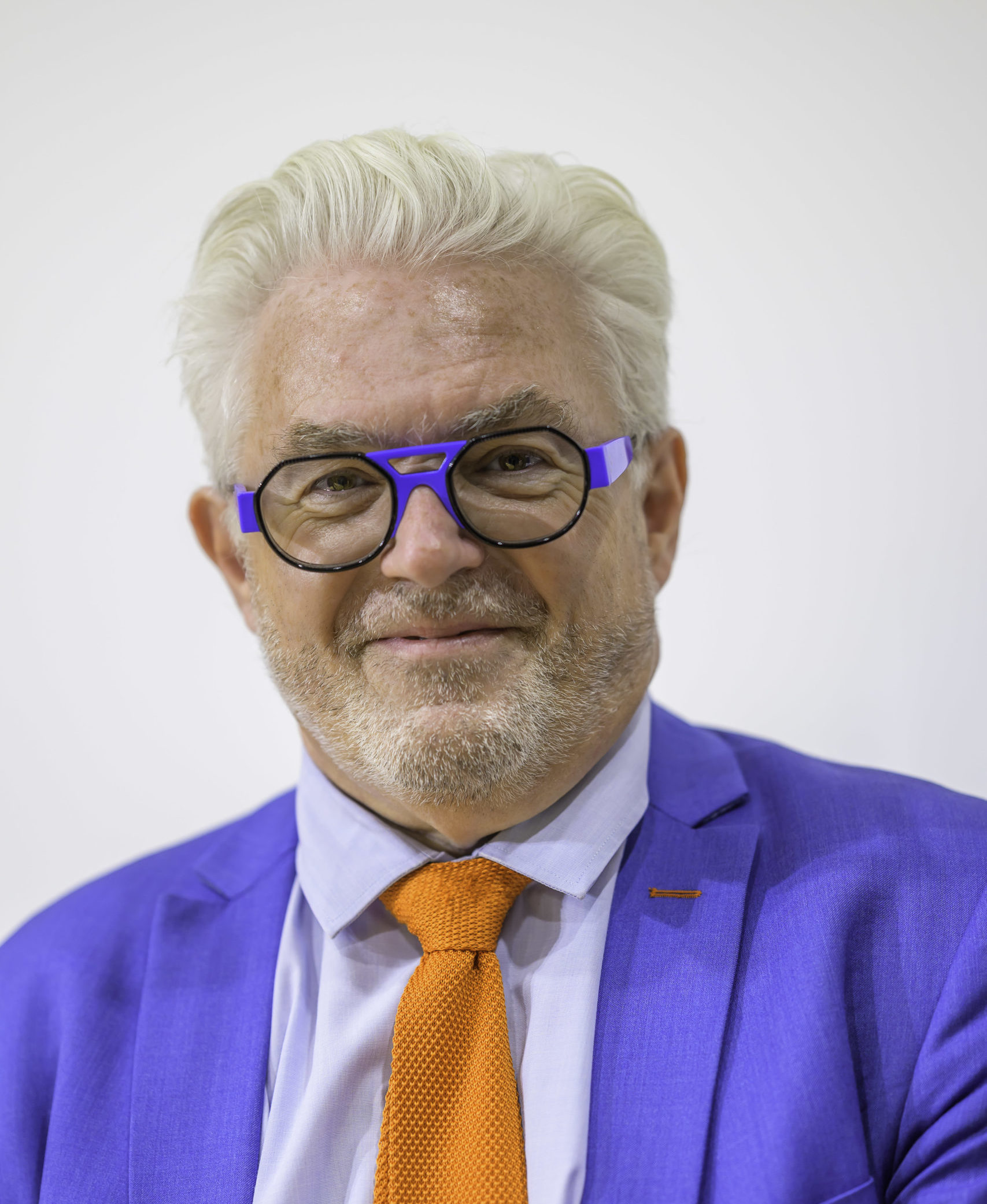
Pascal Berteaud, Director General
Cerema
Innovation as a response to challenges – The french call for projects « Connected Bridges »
The condition of bridges is a major safety issue for users. The information report published by the French Sénat in June 2019 highlighted the ageing of our bridge stock in France and the significant investment required for its maintenance and monitoring. The latest innovations in structural health monitoring offer new prospects for managers, which are more practical, more efficient, and less costly.
To address these challenges, the French government launched in 2021 the “Connected Bridges” call for projects as part of the french National Bridges Program funded by France Relance and led by Cerema. The “Connected Bridges” call for projects was intended to bring new solutions that are more practical, more efficient, and less costly for local authorities to better monitor and maintain their bridges. This call for projects highlighted the potential offered by technical advances in sensors, imaging, and artificial intelligence (AI). These techniques, which have been in development for a long time, are now maturing and enabling progress in infrastructure management : imaging coupled with AI for the inspection of structures, sensors coupled with AI for predictive management.
From 2021 to 2023, the 17 winners were able to test monitoring solutions, predictive management tools, and AI data processing in real-world conditions on bridges managed by the french State or some local authorities.
This keynote will detail this “Connected Bridges” call for projects and summarizes its objectives, organization and main results. It will discuss how innovation can be a major lever for more predictive, reliable, and economical bridge management.
Pascal Berteaud is Director General of CEREMA, the major French public agency for developing public expertise in the fields of urban planning, regional cohesion and ecological and energy transition.

Jan Van Doeselaar, Head of Technical Authority & Architects
Airbus
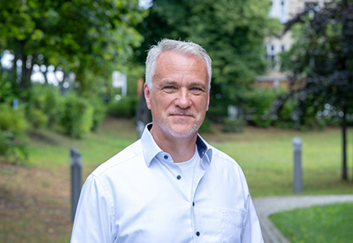
Ernst Niederleithinger, Head of Division
BAM
Ultrasonic Monitoring Above and Below Ground – Practical Experience and the Road Ahead
Active ultrasonic monitoring of reinforced and prestressed concrete structures has been investigated under laboratory conditions for over ten years. Methods originally developed for seismology, such as coda wave interferometry combined with embedded transducers, have proven highly sensitive to early-stage damage detection and robust against environmental factors such as temperature and humidity. Several real, or at least realistic, bridge structures have meanwhile been instrumented and monitored for months or even years. While being of utmost important in a time of ageing infrastructure these are not the only structures currently monitored, there are also example from underground, in particular a metro station and a nuclear waste disposal site.
Based on data acquired from these structures, some existing ones, some newly built, we can demonstrate that the measurement technology is stable and robust. Several experiments have proven that the technology can detect and characterize singular events, such as excess load or wire breaks in prestressing elements, as well as monitor subtle, slowly progressing material changes. The methodology is now starting to be used commercially.
Extensions to this technology are under development, such as using natural temperature changes to drive ultrasonic damage detection (‘temperature modulation’), as well as other so-called nonlinear ultrasonic techniques. Proof-of-concept laboratory experiments have demonstrated the potential of these techniques.
Ultrasonic Monitoring is here to stay, but not on its own. As any other monitoring techniques, it has to be complemented with other techniques, such as its natural companion acoustic emission, fiber optic sensing and/or conventional sensors for temperature and strain.
PhD Dr. rer. nat. Ernst Niederleithinger is a geophysicist. He graduated from TU Berlin, received his doctorate from the University of Potsdam and habilitated at the RWTH Aachen. After 11 years in an engineering firm, he joined BAM, the Federal Institute for Materials Research and Testing, in 2001. Since then, he has been involved in national and international research projects dealing with various aspects of non-destructive testing in civil engineering, mostly with sonic or ultrasonic methods and recently also with muon tomography. He is currently head of the division 8.2 ‘Nondestructive Testing Methods for Civil Engineering’, an interdisciplinary group of about 30 scientists, engineers, technicians, and students. He is a member of various committees and boards dealing with standards and regulations for nondestructive testing in civil engineering. He is also a private lecturer in engineering geophysics at RWTH Aachen University and has been a guest researcher/professor at Colorado School of Mines, University of Ljubljana, University of Technology Sydney, VTT in Espoo and University of Glasgow.

Elena García Sánchez, Project Certification Manager
EASA
Prospects of aeroplane SHM certification
SHM is being developed to assess aeroplane structural integrity and obtain maintenance credit.
For EU airworthiness, using SHM on Principal Structural Elements (PSE) requires showing compliance with
- CS-25.571,
- CS-25.611,
- CS-25.1529 (large aeroplanes) and
- CS-23.2240 (GA), with safety at least equivalent to conventional inspections.
This talk compares SHM and traditional methods; reviews guidance/standards; and explains how to substantiate SHM performance (POD, false-alarm rate, reliability) via test and analysis at appropriate assembly/functional levels. We cover metallic vs composite specifics; fatigue, accidental and environmental damage; sources of variability and sensitivity to them; failure cases and mitigations (redundancy, checks, qualification commensurate with risk). We discuss flight with known damage and the manufacturer–operator–authority process to update certification assumptions from service experience. Stronger coordination between research and industry—informed by certification awareness—offers significant potential to improve safety through innovation.
Elena García Sánchez is an aeronautical engineer. She works at EASA since 2009, as a structures expert and project certification manager, within the Certification Directorate. Before EASA, she worked for 8 years in the industry as a stresswoman.
She has a focus on probability, aeroelasticity and AI, and is involved in the SAE AISC SHM working group.
Luca De Marchi, Associate Professor
University of Bologna
Pushing Intelligence beyond the edge towards Omni-Layer Optimization of SHM Systems
Materials and structural components equipped with “sensing organs” and cognitive abilities may revolutionize many industrial sectors.
Some of them, such as the civil engineering and aviation industries, would particularly benefit from the deployment of massively-dense intelligent sensor networks for structural integrity assessment. Although desirable, the realization of pervasive, permanently installed, real-time and large- or meso-scale monitoring solutions poses still major technical challenges, due to the severe energy consumption, weight and ease of installation requirements of these application fields. Moreover, the amount of new data generated may surpass the limit of maintenance systems to manage it, or even to gather it to central processing stations.
Such problems can be tackled by optimally distributing feature extraction and other intelligent tasks even beyond digital processors located on the extreme edge, i.e., directly to smart structural components, materials and sensors.
In particular, this talk will analyze:
- the potential of novel sensing and pre-processing strategies based on recent research breakthroughs in nanocomposites and in functionalized
- piezoelectric-,
- phononic-,
- resonant-,
- magneto- and
- electrostrictive-
metamaterials and sensing skins
- how these technologies can be coupled with electronic interfaces basing on Analog to Information techniques, and/or Mixed-Signal Computing with Non-Volatile Memories, and/or Approximate Computing for an omni-layer optimization of the operational bandwidth, autonomy, robustness, and efficiency of the SHM systems.
Luca De Marchi is currently an Associate Professor of Electronics with the University of Bologna and Associate Editor of the IEEE Transactions on Ultrasonics. He is also Coordinator of UNIBO PhD Programme in Engineering and Information Technology for Structural and Environmental Monitoring and Risk Management. His research strives to develop intelligent sensor systems featuring low hardware complexity and low power consumption for in-situ, real-time operation, with a particular emphasis on Structural Health Monitoring applications. In this field, he has authored more than 200 articles in international journals or proceedings of international conferences, and he contributed to the development of patented piezoelectric devices (or meta-transducers).
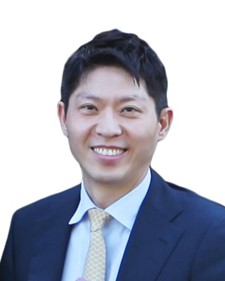
Hoon Sohn, Professor
Korea Advanced Institute of Science and Technology
Low-cost and high-accuracy displacement sensor for civil infrastructure structural health monitoring
Structural displacement is a critical physical quantity for monitoring civil infrastructure. The importance of this measurement has driven the development of numerous dedicated sensors and sensing technologies.
This study presents a novel, cost-effective, and high-accuracy displacement sensor. Its architecture comprises an integrated frequency-modulated continuous-wave (FMCW) radar, a microelectromechanical systems (MEMS) accelerometer, a microcontroller unit (MCU), a wireless data transmission module, and a power supply unit. Through the synergistic fusion of data from the FMCW radar and MEMS accelerometer, the sensor attains exceptional displacement measurement performance with an accuracy better than 0.1 mm. Significant cost reduction was realized by leveraging a readily available FMCW radar chip, prevalent in autonomous vehicle systems, alongside an off-the-shelf MEMS accelerometer, projecting a unit cost under $1,000.
Acquired and processed data are wirelessly disseminated to a range of client devices, such as mobile phones, laptops, and desktop computers, via diverse wireless protocols including Wi-Fi, LTE, and LoRa. The sensor operation is facilitated by a flexible power system, drawing energy from either a rechargeable lithium battery or an integrated solar panel, enabling fully self-contained and autonomous operation.
The utility of this sensor spans multiple critical applications, encompassing:
- continuous monitoring of road and rail bridges for early warning of collapses and impending hazards,
- automated in-situ evaluations for bridge rating,
- spatio-temporal displacement characterization utilizing distributed and non-dedicated telecommunication cables, and
- structural integrity testing of a real nuclear power plant.
Hoon Sohn received his B.S. and M.S. degrees from Seoul National University, Seoul Korea and Ph.D. from Stanford University all in Civil Engineering. He worked at Los Alamos National Laboratory (LANL) as a Technical Staff Member and at Carnegie Mellon University as an Assistant Professor. He is now a Professor at KAIST (Korea Advanced Institute of Science and Technology) in South Korea, and an Executive Director at Korea Railway Innovation Institute under Korea National Railway. His research interest has been in the areas of structural health monitoring, nondestructive testing, sensing technologies and data analytics. He has published over 280 refereed journal articles, over 400 conference proceedings, and 12 book & book chapters. He is holding 58 domestic and 28 international patents, and his developed technologies are licensed and commercialized by private companies, resulting in over 1.5 Million USD licensing agreements. He is currently SPIE Fellow, Member of National Academy of Engineering of Korea (NAEK), and Member of Korean Academy of Science and Technology (KAST).